The best time to visit Machu Picchu is the dry season, roughly May through September, when clear skies, mild days and reliable trail conditions line up. The trade-off is crowds, since those same months are the busiest of the year. If you care more about having the ruins to yourself, the shoulder months of April, May, September and October give you most of the good weather with a fraction of the foot traffic. Temperatures at Machu Picchu barely move across the calendar, so your decision is really about rain and crowds, not heat and cold. Below is a practical, month-by-month breakdown to help you pick dates that match your priorities, whether that is flawless photos, a quieter visit, or a specific trek like the Inca Trail.
Key takeaways
- The dry season runs May through September and gives you the clearest skies and the most reliable photos, but it also draws the largest crowds.
- The wet season runs November through March, with the heaviest rain in January, February and March, and the Inca Trail closes for all of February.
- April, May, September and October are the shoulder-season sweet spots, balancing decent weather with thinner crowds and easier ticket availability.
- Peru caps daily entry at 5,600 visitors in peak season and 4,500 in the regular season, so popular dates sell out and early booking matters.
- Temperatures stay mild all year, so your real decision is rain versus crowds rather than hot versus cold.
Dry Season vs Rainy Season: The Best Time to Visit Machu Picchu
Machu Picchu sits in a cloud forest where warm, moist air rising from the Amazon basin meets the cooler Andes. That microclimate produces two well-defined seasons built around rainfall rather than temperature. Under the Köppen climate classification it is a subtropical highland climate, and in that system a month counts as part of the wet season once average precipitation reaches 60 millimetres, about 2.4 inches, which is a useful benchmark when you read monthly rain figures.
The dry season runs from about May through September. Rain is infrequent, mornings are usually clear, and the light is steady enough that you can plan a photo-focused visit with confidence. Afternoon showers still happen, so this is "drier," not "bone dry."
The wet season runs from about November through March. Rain falls most days, often heaviest overnight and in the early morning, and low cloud can sit on the ridgelines and hide the citadel until the sun burns it off. The upside is a vivid green landscape, lower prices on some services, and far fewer people.
Dry Season (May to September): Rainfall is generally low, with occasional afternoon showers and mostly clear skies offering excellent views of Machu Picchu. This is the busiest time of year, and entrance tickets can sell out on popular dates. The Inca Trail remains open and is especially popular during these months. This season is ideal for photography, trekking and first-time visitors.
Wet Season (November to March): Rainfall is more frequent, particularly from January to March, with morning clouds and mist commonly covering the mountains. Visitor numbers are generally lower, and entrance tickets tend to be easier to obtain. The Inca Trail closes throughout February. This season is ideal for budget-conscious travelers seeking fewer crowds, peaceful surroundings and lush green landscapes.
Month-by-Month Weather and Crowd Breakdown
Here is how the year actually feels on the ground, pairing weather with crowd levels so you can weigh both at once.
- January to March – Rainy Season: January brings frequent rainfall, lush green landscapes and relatively few visitors. February is typically the wettest month, with low crowds and the Inca Trail closed for maintenance. March remains rainy, although conditions gradually improve toward the end of the month. These months are ideal for travelers seeking greener scenery and fewer tourists.
- April to May – Transition to Dry Season: April offers a pleasant balance of green landscapes, increasingly clear skies and moderate crowds. By May, rainfall decreases significantly, visibility improves and visitor numbers remain manageable. May is widely considered one of the best months to visit Machu Picchu.
- June to September – Dry Season and Peak Tourism: June marks the beginning of the busiest travel period, with clear skies, cooler nights and increasing crowds. July and August are generally the most crowded months, offering predominantly dry conditions but requiring reservations well in advance. September maintains favorable weather while visitor numbers gradually decrease toward the end of the month.
- October to December – Transition to Rainy Season: October combines occasional showers with moderate crowds, making it an attractive alternative to peak season. November brings more frequent rainfall and a quieter atmosphere. December is increasingly wet, with visitor numbers rising around the Christmas and New Year holidays.
The driest and clearest window is June through August, which is exactly why it is also the most crowded. June and July see the lowest rainfall of the year and the coldest nights. January, February and March carry the heaviest rain. Temperatures themselves stay mild throughout, with daytime highs generally in the high 60s to low 70s Fahrenheit and nights dipping into the high 40s to low 50s, so warm layers for early starts matter more than any seasonal temperature swing.
Best Months for Clear Photos and Trekking
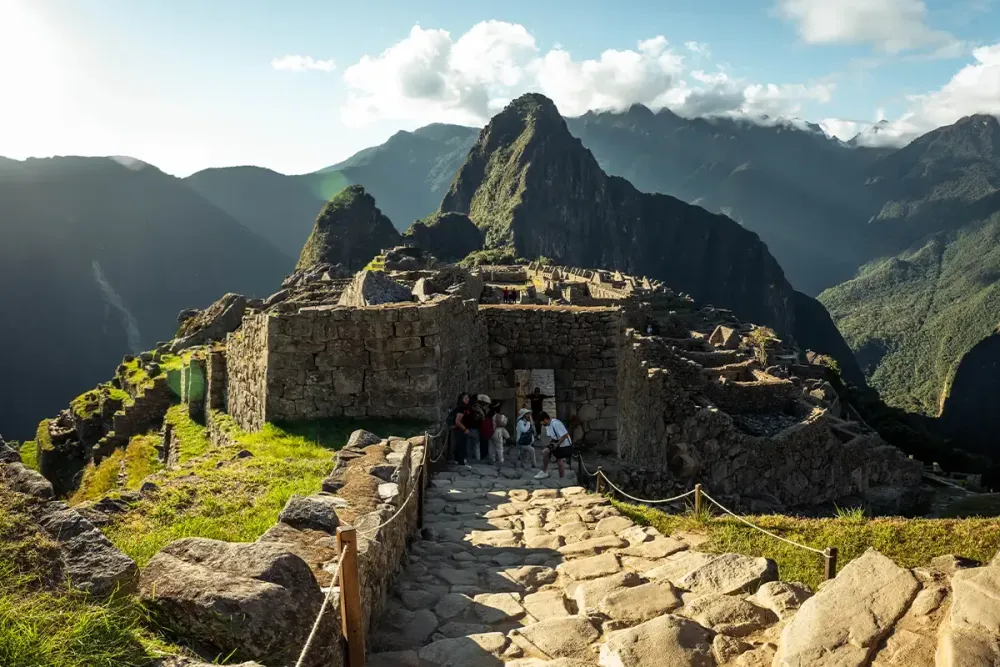
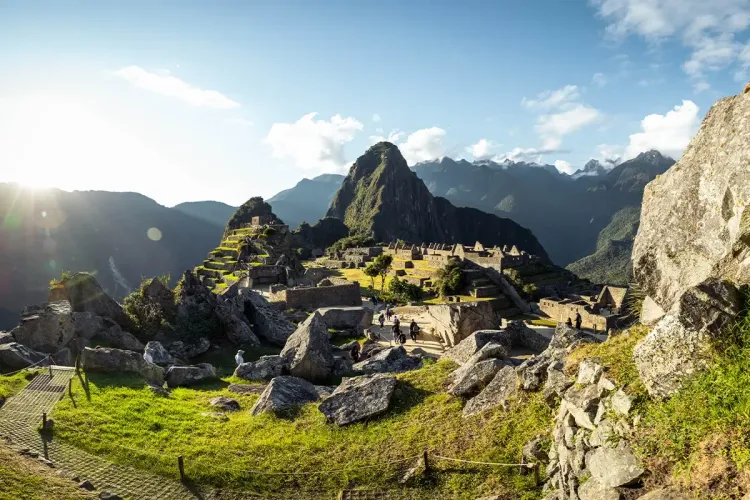
For photography, June through August give you the most dependable light. Skies are typically clear, the sun angle is strong, and you are unlikely to lose a morning to low cloud. If your trip hinges on that classic unobstructed shot from the upper terraces, these months stack the odds in your favor. Arrive at opening and work the first hour, when side light rakes across the stonework and the midday crowds have not yet built.
For trekking, the same dry months are ideal. Trails are firmer, river crossings are lower, and leeches and slick mud are far less of a problem than in the wet season. The classic Inca Trail is busiest here, so permits for June through August need to be secured well ahead. Peru also controls how many people hike it: no more than 500 people per day are allowed on the Inca Trail, and that figure includes guides, porters and cooks, which leaves a limited number of spots for travelers.
If you want strong photos without the full peak-season rush, early May and late September often deliver clear conditions with noticeably lighter crowds than midsummer. These are the dates we most often recommend to first-time travelers who want both good light and breathing room.
Shoulder-Season Sweet Spots for Fewer Crowds
The shoulder months, April and October in particular, plus the edges of May and September, are where many experienced travelers land. In April the heavy rains have mostly ended, the terraces are still brilliant green, and the high-season surge has not started. October offers the reverse: mostly settled weather with the occasional shower, and crowds that have eased since September.
Choosing a shoulder month also makes the logistics easier. Peru manages Machu Picchu with timed entry and fixed circuits, and it caps daily entry at up to 5,600 visitors during peak seasons and 4,500 during the rest of the year. In the dry-season peak those slots disappear fast on popular dates. Travel in the shoulder season and you will generally find ticket availability, train seats and hotel rooms in Aguas Calientes much easier to pin down, often at better rates.
A realistic approach for most first-time visitors: target late April to mid-May or late September to mid-October, build in a buffer day in Cusco or the Sacred Valley to acclimatize to the altitude, and book your entrance time for the morning. This option works best if you want good weather and a calmer experience without gambling on the wettest months.
How Weather Affects Train and Trail Availability
Season does more than change the view. It changes what is open and how you get there. The most important fixed date is the Inca Trail closure: the classic route shuts down for the entire month of February every year for maintenance and reopens March 1. If February is your only window and you want to trek, you will need an alternative such as the Salkantay or Lares route, both of which stay open and finish with a train leg to Aguas Calientes.
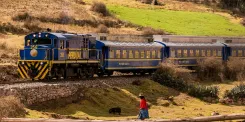
Train service can also be affected in the wettest months. Heavy January-through-March rain occasionally triggers landslides or track maintenance along the river route from Ollantaytambo, which can lead to temporary schedule changes or bimodal service by bus and train. These disruptions are usually short, but they are far more likely in the wet season than the dry, so wet-season travelers should keep a flexible morning and avoid booking a tight same-day connection to an international flight out of Lima.
Machu Picchu itself is a year-round destination and, as a UNESCO World Heritage Site, it stays open regardless of season. The practical constraints are the February trail closure, the daily entry caps, and wet-season transport hiccups rather than any full closure of the ruins.
Planning around these details is where a local operator earns its keep. At Machupicchutour we build itineraries around the realities of the season you choose, coordinating entrance times, train classes, trail permits and acclimatization days so the pieces line up, especially in peak season when tickets and permits sell out early. If you already have travel dates in mind, the most useful next step is to map a specific itinerary against them, then lock in the time-sensitive bookings first. Tell us your dates and how many days you have, and we will put together a plan and a quote that fits the season you are traveling in.
Frequently asked questions
What is the single best month to visit Machu Picchu?
May is the strongest all-around choice. The rains have just ended, the landscape is still green, skies are usually clear, and the heaviest crowds of June through August have not yet arrived.
Is it worth visiting Machu Picchu in the rainy season?
Yes, if you accept the trade-offs. December through March brings daily rain and more cloud cover, but also fewer visitors, easier tickets and lush green terraces. Pack rain gear and plan flexible mornings.
Does Machu Picchu ever close?
The citadel itself stays open year-round. The classic Inca Trail, however, closes every February for maintenance and reopens March 1, so February trekkers use alternative routes like Salkantay.
How far ahead should I book for the dry season?
For June through August travel, reserve entrance tickets, train seats and Inca Trail permits several months in advance. Inca Trail permits in particular often sell out well before the trek date.
Will rain ruin my photos of Machu Picchu?
Not necessarily. Morning clouds in the wet season often lift by mid-morning and can create dramatic images. Clear, consistent light is far more likely from May through September.