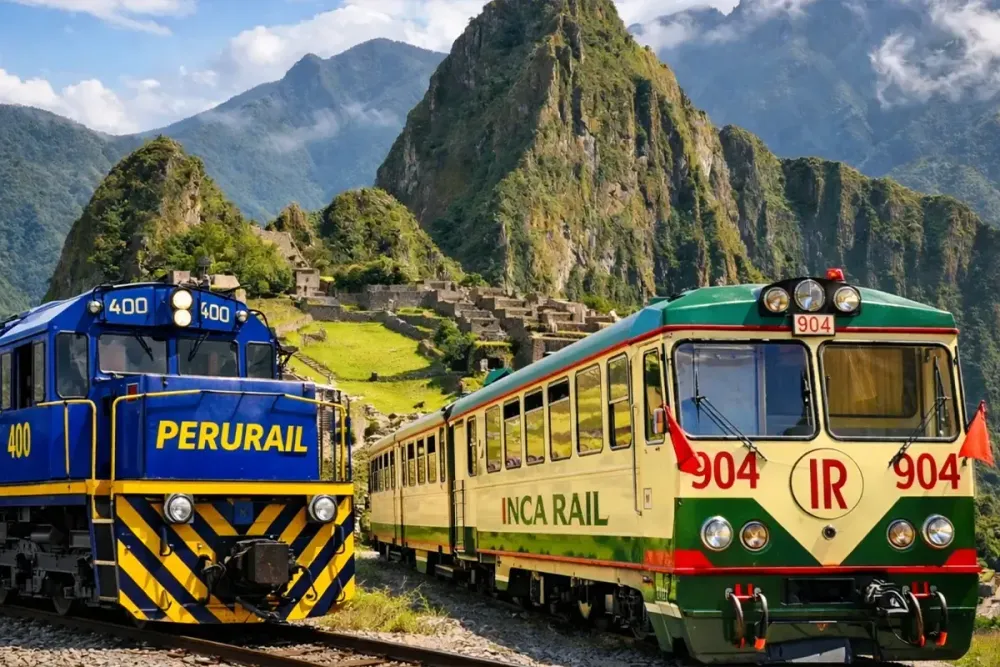
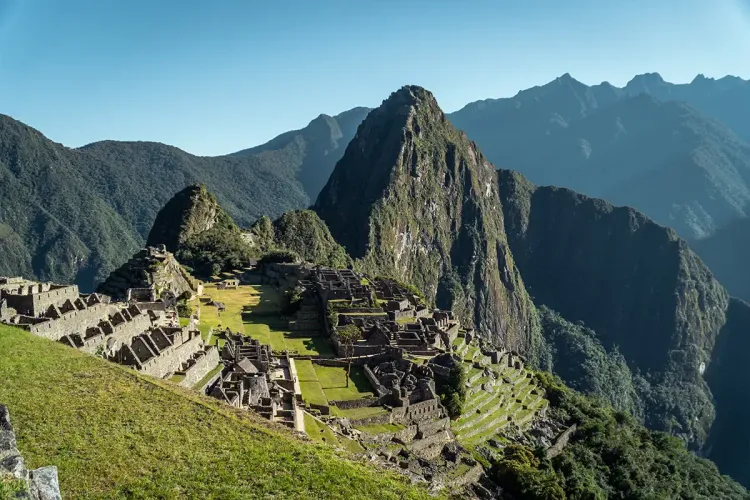
The Cusco to Machu Picchu train runs on a single track operated by two companies, PeruRail and Inca Rail, and every service ends at Aguas Calientes, the town at the base of the citadel. From there a short bus carries you up to the entrance. Your decision comes down to which company, which class and which station fits your trip, because all the trains cover the same route at a similar pace. This guide walks through both operators, their classes from budget to luxury, where the trains depart, how long the ride takes, and how to pick the right seat. By the end you should know exactly which Machu Picchu train option matches your budget and travel style.
Key takeaways
- There is no direct rail line into the Machu Picchu citadel: every train runs to Aguas Calientes (Machu Picchu Pueblo), where a short bus takes you up to the gate.
- Most travelers board at Ollantaytambo, a roughly 1.5-hour ride, rather than from Cusco, which adds more than an hour each way.
- PeruRail and Inca Rail both run budget, panoramic and luxury classes on the same track, so the real choice is comfort and onboard experience, not speed.
- For the best river and valley views, sit on the left side heading toward Machu Picchu and the right side on the way back.
- Book 2 to 3 months ahead for travel between May and September, when seats sell out and fares climb.
Cusco to Machu Picchu train operators: PeruRail and Inca Rail
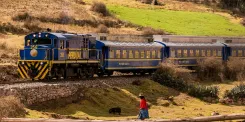
Two companies share this route, and travelers often assume one must be clearly better. In practice they are closely matched. Both run comfortable, modern trains on the same line, and the experience is similar within each price tier.
PeruRail is the larger operator with the most departures and the widest range of classes. It also runs the only true luxury train on the line, the Belmond Hiram Bingham.
Inca Rail is the smaller operator, known for its panoramic 360 service and a streamlined set of three classes. It tends to have fewer daily departures but competitive comfort.
For most travelers the practical difference is schedule and availability. When one company sells out your preferred time, the other usually has a seat within an hour or two. We recommend checking both before you commit, especially in high season.
Train classes from budget to luxury
Each operator offers a budget option, a panoramic mid-tier, and a premium or luxury service. Here is how they line up.
PeruRail
- Expedition
- Vistadome / Vistadome Observatory
- Belmond Hiram Bingham
Inca Rail
- The Voyager
- The 360
- The First Class
Budget (Expedition, The Voyager). These are the everyday tourist trains. Expect comfortable seats, side windows and a clean, pleasant ride. Food is generally not included. This tier is the right choice if the train is simply transportation and you would rather spend your money on the mountain itself.
Panoramic (Vistadome, The 360). The mid-tier trains add glass panels in the ceiling as well as the sides, so you can look up at the canyon walls and peaks. They usually include a snack and some onboard entertainment, such as music or a short traditional performance on the return leg. Inca Rail's 360 adds an open-air observatory car. For most first-time visitors this is the sweet spot: noticeably more scenery and comfort without a luxury price. Inca Rail lists The 360 as a roughly 1 hour 30 minute ride from Ollantaytambo.
Luxury (Belmond Hiram Bingham, The First Class). At the top end you get dining cars, an observation lounge with an open deck, a bar, live music and full meal service. The Hiram Bingham also bundles the Machu Picchu entrance ticket, the bus and a guided tour, which is why its fare runs far above the standard classes. This tier suits honeymooners, special occasions and travelers who want the journey to be part of the experience rather than a transfer.
Here is who each class works best for:
- Expedition or Voyager: budget-conscious travelers and anyone treating the ride purely as transport.
- Vistadome or The 360: couples, families and first-timers who want the best views without a luxury spend.
- Hiram Bingham or First Class: honeymoons, milestone trips and travelers who want a full onboard experience.
Departure stations and journey times
Where you board matters more than many travelers expect. The train can start in Cusco or in the Sacred Valley, and the difference is more than an hour each way.
- Departure station: Ollantaytambo. Located in the Sacred Valley, the train journey to Aguas Calientes takes approximately 1.5 hours.
- Departure station: Poroy / San Pedro. Located near or within Cusco, the train journey to Aguas Calientes takes approximately 3 to 3.5 hours.
Ollantaytambo is where the large majority of trains depart, and it is the station we recommend for most itineraries. The ride is shorter, and the lower altitude of the Sacred Valley helps with acclimatization compared with sleeping in Cusco.
Cusco-area stations (San Pedro in the city and Poroy nearby) offer seasonal direct departures, but the ride is roughly twice as long. PeruRail confirmed that it resumed services from its San Pedro and Poroy stations in Cusco after a period of suspension, so availability can change by season. Many Cusco departures are also bimodal, meaning you take a bus to Ollantaytambo and join the train there.
A realistic plan for most travelers is to spend a night or two in the Sacred Valley, then board at Ollantaytambo. This shortens the train day and breaks up the altitude adjustment. If you prefer to base yourself in Cusco, build in the extra travel time and confirm whether your service is direct or bimodal.
How to book seats and choose the best side
Both companies sell tickets on their official websites, and booking directly is straightforward. A few practical points save travelers trouble at the station.
Book early in high season. Between May and September, the most convenient morning and early-afternoon departures sell out weeks ahead, and fares rise as seats fill. We recommend booking 2 to 3 months in advance for travel in those months. In the quieter months you have more flexibility.
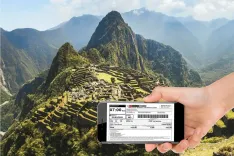
Have your passport ready. Both PeruRail and Inca Rail require each passenger's passport number at the time of booking, and you must carry the same passport to board. Enter the number exactly as it appears in your document.
Pack light for the train. Baggage is tightly limited, with each passenger generally allowed one bag of around 8 kg. Plan to leave larger suitcases at your Cusco or Sacred Valley hotel and travel to Aguas Calientes with a small day bag.
Arrive about 40 minutes early. Trains leave on time and do not wait, so give yourself a buffer at the station.
Choose the left side heading in. Going toward Machu Picchu, the left side follows the Urubamba River and the canyon, which is the more scenic view for most of the ride. On the return, the right side gives you the river. If you are booking a panoramic class, this seating choice matters less because of the ceiling windows, but it is still worth asking when you reserve.
If coordinating trains, tickets, hotels and bus transfers starts to feel like a lot of moving parts, this is exactly where a local operator earns its keep. At Machupicchutour we handle the train class, station timing and entrance logistics as one package, so the pieces line up instead of competing for the same tight connection. Travelers who want to compare options and get a tailored plan can request a quote and we will match the right service to the itinerary.
Scenic highlights along the route
The ride itself is one of the trip's quieter pleasures, and it changes character as you descend from the highlands into the cloud forest.
- The Sacred Valley and Urubamba River. The early stretch runs alongside the river through farmland and old agricultural terraces, with the water staying mostly on the left.
- The canyon narrows. Past Ollantaytambo the valley tightens and the mountainsides close in, so the ceiling windows on panoramic trains come into their own.
- Cloud forest. As you lose altitude the vegetation turns lush and green, a visible shift from the dry highlands around Cusco.
Peaks and waterfalls. Snow-touched summits and thin waterfalls appear through gaps in the ridgeline, best seen from the left on the way in.
By the time the train reaches Aguas Calientes you have dropped well below Cusco's altitude, which is one reason many travelers feel better on the mountain than they did in the city. For background on the line and its operator, PeruRail's company history gives useful context on how the route developed.
Picking the right train for your trip
Start with your station. If you are staying in the Sacred Valley, board at Ollantaytambo for the short ride. If you are based in Cusco, confirm whether your service is direct or bimodal and allow the extra hours. Then match the class to your budget: a budget service if the train is just a transfer, a panoramic class if you want the views, or luxury if the journey is part of the celebration.
Once you know your dates, lock in the train as early as you can for travel between May and September. If you would rather not juggle the train, entrance tickets and bus timing separately, request a quote from our team and we will put together an itinerary with the right train class and connections already sorted.
Frequently asked questions
How long is the train from Cusco to Machu Picchu?
From Ollantaytambo it is about 1.5 hours to Aguas Calientes. Services that start in Cusco add bus transfers and run closer to 3 to 3.5 hours total.
Is there a direct train from Cusco city to Machu Picchu?
Seasonal services run from Cusco stations, but most trains depart from Ollantaytambo in the Sacred Valley. Many Cusco departures are bimodal, combining a bus to Ollantaytambo with a train from there.
Which side of the train has the best views?
Sit on the left side heading toward Machu Picchu to follow the Urubamba River and canyon, then switch to the right side for the return journey.
Do I need my passport to book a Machu Picchu train?
Yes. Both PeruRail and Inca Rail require the passport number of each passenger at booking, and you must carry that same passport to board.
What is the baggage limit on the train?
Each passenger is limited to one bag of roughly 8 kg. Larger luggage should be left at your Cusco or Sacred Valley hotel.